

On-site Agentic AI Workshop · Supply Chain & Operations
Turn a real supply-chain problem into something your team can test, challenge and act on in one day.
A hands-on Agentic AI workshop where practitioners build with realistic data, leaders work alongside them, and every use case ends with a clear decision: stop, explore, pilot or involve IT.
Recently delivered in Amsterdam: 32 ideas submitted, 17 cases prioritized for preparation and 15 business cases worked on during the workshop.
Built for CSCOs, COOs, and planning, logistics, procurement and operations leaders
Evidence
What happened when a global supply-chain team tried it
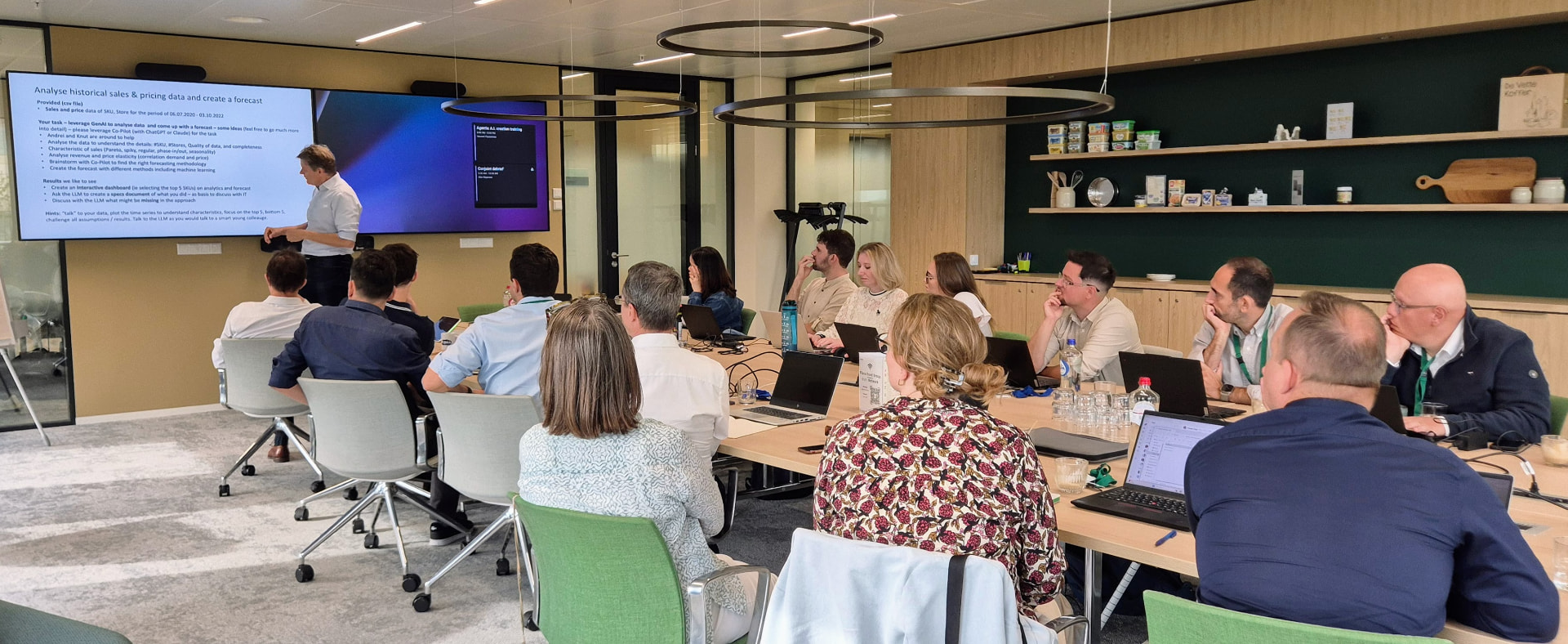
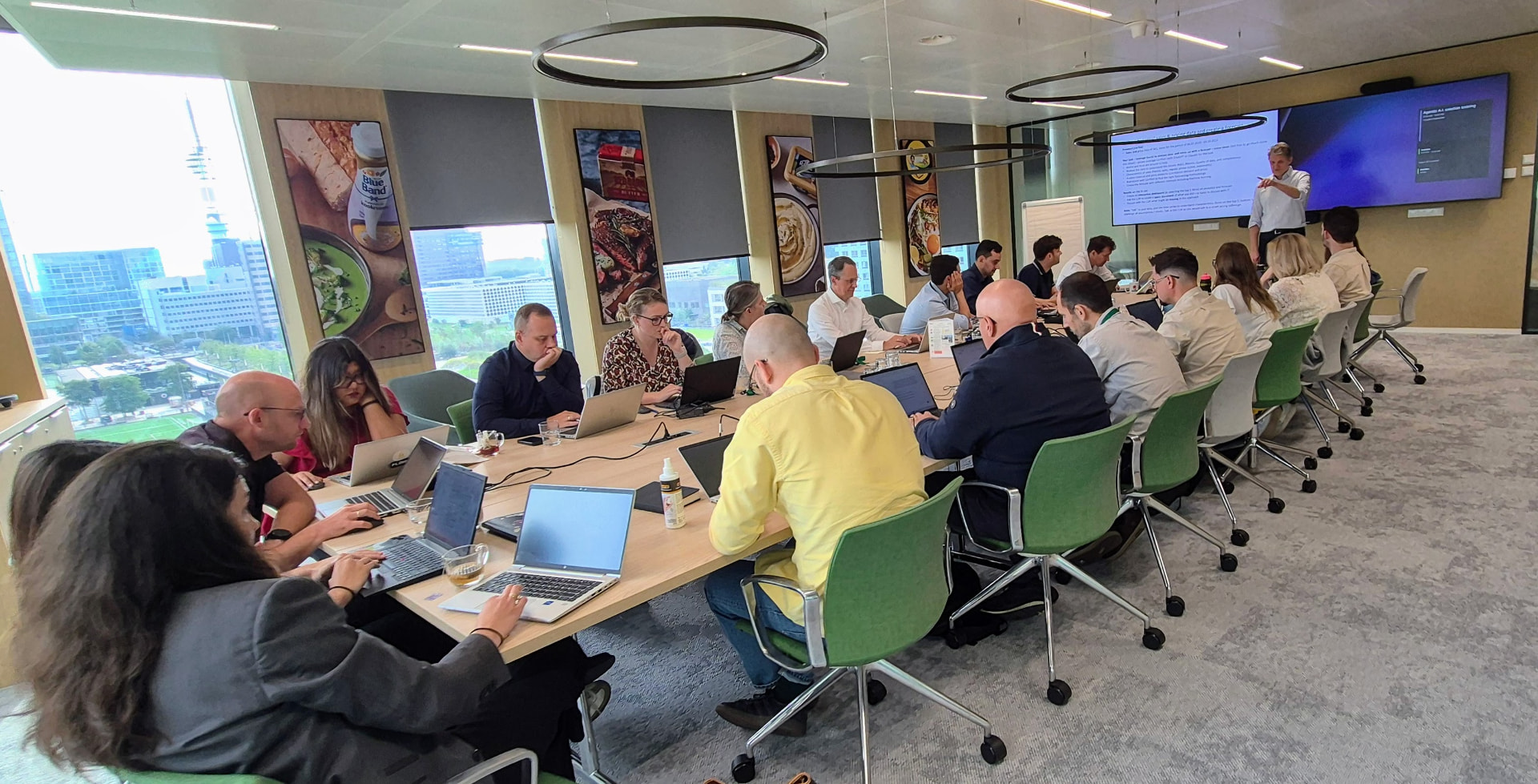
In August 2026, we ran the workshop in Amsterdam with supply-chain and procurement professionals and their functional leaders. The goal was not to discuss AI. It was to test whether teams could turn real operational problems into tangible, challengeable workflows, prototypes and decision tools in one day.
The cases covered planning, logistics, procurement, inventory, customer claims, master data and operational reporting. Participants worked on real business problems using realistic data, documented rules and clear acceptance criteria.
The strongest result was not the technology itself. Participants learned what good input looks like, where business rules matter, which ideas are feasible and when a promising prototype requires further piloting or IT involvement.
The workshop created demand for further in-person and virtual sessions, ongoing support and a four-week progress review.
Delivered for an anonymized global supply-chain organization.
Selected cases
15 real business cases, not generic AI demonstrations
The workshop focused on real operational decisions. Examples of the selected cases included:
Trade-term cost scenario calculator
- Problem
- Cost to serve shifts with every change a customer asks for in negotiation.
- Tested
- A what-if calculator recalculating logistics cost when delivery frequency, order size, ship-to pattern or pallet configuration changes.
- Supports
- Which trade terms to concede, shown as cost per ton and absolute cost.
Forward-promotion validation agent
- Problem
- Promotional volumes are planned on optimism rather than comparable evidence.
- Tested
- A check of planned promotions against comparable historical uplift and actual sell-out, flagging likely over- or under-planning.
- Supports
- Whether to adjust the promotional forecast before it is locked.
Transport-cost bridge analysis
- Problem
- Transport-cost variance is visible in total but not explainable by driver.
- Tested
- Decomposition of forecast-versus-actual variance into volume, lane mix, distance, rate, truckfill, weightfill and mode, with waterfall, lane drill-down and written commentary.
- Supports
- Where to intervene on cost, and which lanes to renegotiate.
Delivery-status assistant
- Problem
- Order and truck status questions consume planner and service time all day.
- Tested
- A focused prototype over controlled data answering where an order is, when a truck is booked to load or unload, and whether a SKU is service-critical. Not a live enterprise integration.
- Supports
- Whether status handling can be deflected from planners to self-service.
Raw-material PO allocation assistant
- Problem
- Demand is split across open contracts by habit rather than by rule.
- Tested
- A recommendation using demand, stock, in-transit inventory, lead time, supplier resilience, rolling cost, contract limits and validity windows.
- Supports
- How to allocate the next purchase orders across suppliers.
Forward obsolete-stock risk agent
- Problem
- Write-off risk becomes visible only once the stock is already short-dated.
- Tested
- A ranking combining shelf life, forward stock cover, forecast consumption, customer shelf-life requirements and phase-in or phase-out timing.
- Supports
- Which SKUs to redirect, discount or stop producing now.
Penalty and claims assessment agent
- Problem
- Customer claims are settled without consistent evidence checks.
- Tested
- Matching a claim against delivery evidence and contractual service levels, then drafting an accept-or-reject case for human review.
- Supports
- Whether to accept, dispute or escalate a claim.
Daily transport-planning assistant
- Problem
- Daily load building is manual and inconsistent between planners.
- Tested
- A daily FTL proposal built from available DC stock, destination requirements, weightfill, truckfill and days-after-release rules, with exceptions separated out.
- Supports
- Which loads to release today and which need a planner.
Private-label pricing and PNI preparation
- Problem
- Quote preparation is slow, manual and error-prone.
- Tested
- An incoming quote request turned into the standard working file with pricing inputs, factory-selection logic, validation checks and a draft price sheet.
- Supports
- Whether the quote can be issued as drafted.
Vendor-onboarding validation agent
- Problem
- Incomplete or duplicate vendor submissions stall onboarding.
- Tested
- Field and business-rule validation, duplicate-supplier checks and exception routing with a stated reason.
- Supports
- Whether a vendor record can be approved or must be returned.
Who this is for
Built for operations leaders ready to move past the demo.
Built for
- Heads of Supply Chain, Planning, Procurement, S&OP, Logistics
- Operations leadership teams piloting or scaling agentic AI
- Functions tired of pilots that don't reach production
Not for
- Teams looking for a generic "AI 101" overview
- Audiences that won't open a laptop
- Organisations not ready to share an anonymised dataset
How the day works
One day. One method. A working artifact at the end of it.
- Step 01
Executive keynote
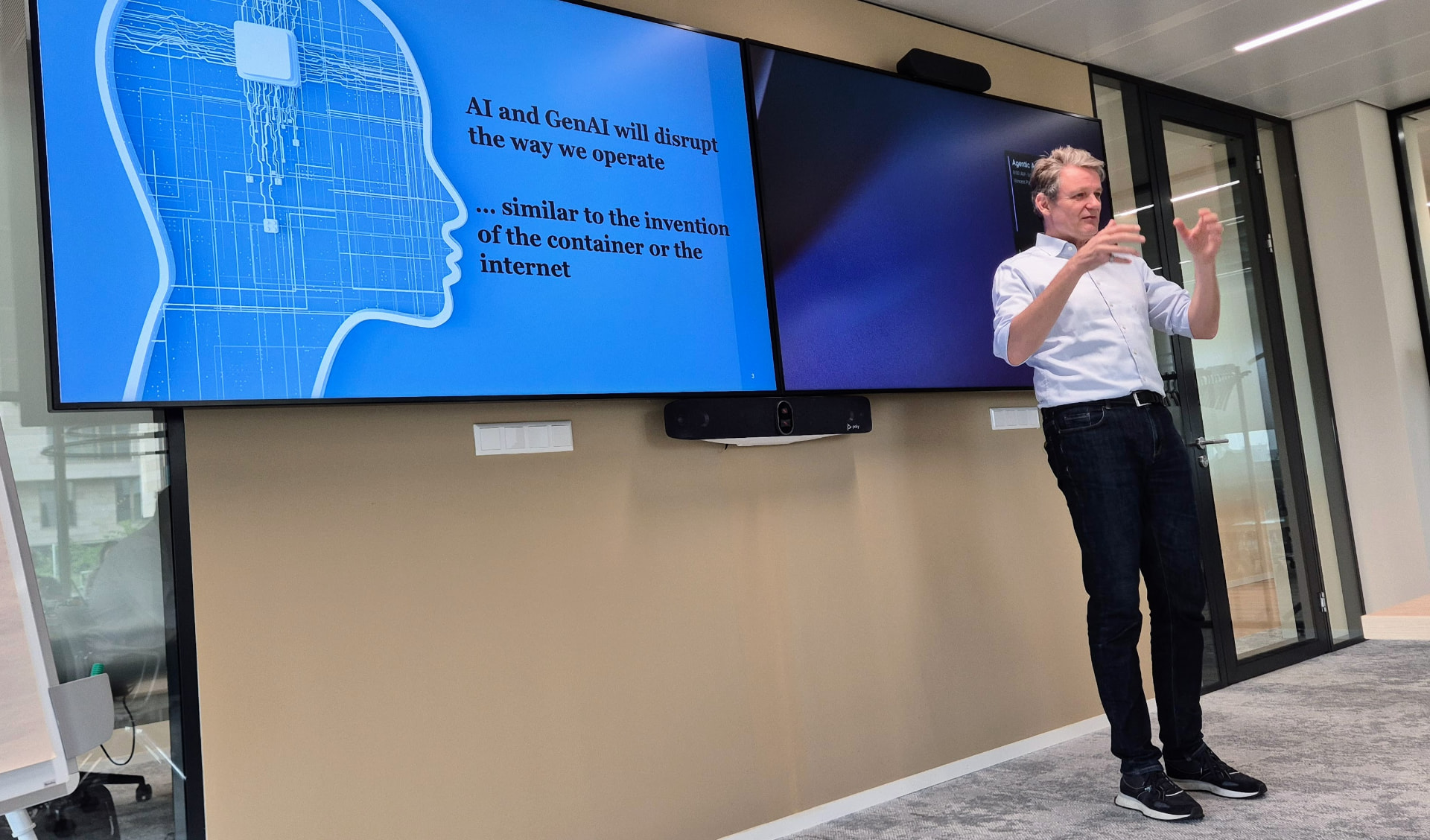
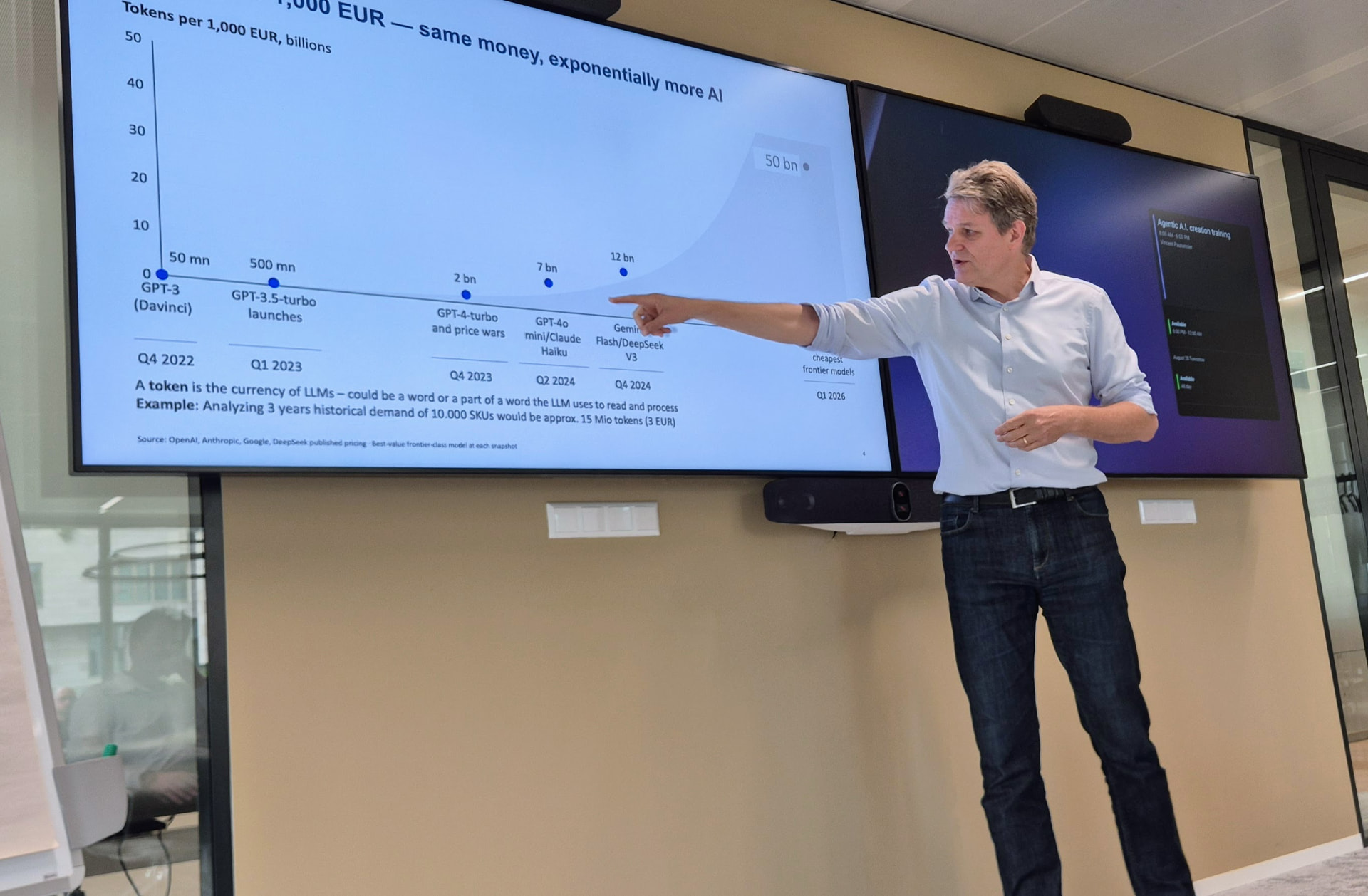
· 45 minAgentic AI in supply chain: what's real, what's hype, where value is actually being created.
- Step 02
Guided build
· 3 hrsParticipants solve a real problem from their function with live coaching. Two builds in the full-day format.
- Step 03
Share & pressure-test
· 45 minTeams present output; the group sharpens prompts, logic, and assumptions.
- Step 04
Roadmap & next steps
· 1 hrEach participant leaves with a 30-day automation list; sponsors get the prioritised hitlist and readout.
The method
Five steps from a real problem to a working tool — and an IT spec your team can ship.
The same loop your people will run on every workshop build, and on every automation they pick up after.
- 01
Frame the decision
What is the planner, buyer, or ops lead actually trying to decide? Sharp problem statement before any tool is opened.
OutputA one-paragraph decision brief - 02
Bring the data
Your spreadsheet, an extract, or an anonymised sample from our supply-chain library. Real shape, real edge cases.
OutputA working dataset - 03
Prompt the build
Translate intent into a working tool with the AI. Forecast, planning board, exception agent — whatever the decision needs.
OutputA running MVP - 04
Pressure-test
Challenge the logic, the assumptions, the edge cases. The group sharpens prompts until the output is worth defending.
OutputAn MVP you trust - 05
Hand off
Turn the working MVP into a one-page IT spec the central team can actually execute — or keep using it as-is inside the function.
OutputA usable IT specification
Adoption journey
From one workflow to a practical adoption roadmap
- Day 0
Workflow diagnostic
Identify one user, one operational problem and one decision that matters.
- Preparation
Data and rules
Collect realistic sample data, document the key business rules and define an acceptance test.
- Workshop day
Build and challenge
Practitioners build and test workflows while leaders challenge assumptions, feasibility and business value.
- Week 1
Prioritize
Rank the strongest opportunities by value, feasibility and risk.
- Week 4
Progress review
Review what was tested, what changed and where support or IT involvement is needed.
- Month 3
Pilot or scale
Advance the strongest cases into a governed pilot, another cohort, another function or another region.
What you leave with
Every participant leaves with a tested workflow or prototype, documented prompts and a clear next decision.
- Ranked use-case portfolio
- Tested workflows, prototypes or decision tools
- Documented prompts and business rules
- Acceptance criteria for the strongest cases
- Stop, explore, pilot or involve IT recommendation
- 30/60/90-day action roadmap
- Optional four-week progress review
Outputs are working prototypes built for evaluation. Whether any of them becomes a production tool is exactly the decision the workshop is designed to inform.
Where this fits in your stack
Vibe-coding is the translation layer — not a replacement for your core systems.
The fastest bridge between what planners actually need and what APS, ERP, and your data platform can execute. The workshop trains your function to own that bridge.
Planner & buyer needs
Decisions that change weekly. Edge cases the standard system never modelled. The Excel nobody wants to maintain.
Vibe-coded MVP layer
A working tool built by the function, in days not quarters. Tests the logic on real data, before any central commitment.
APS · ERP · data platform
What the MVP feeds into: a tighter spec, a faster IT handoff, and core systems that get the right requirements the first time.
Proof of what's now possible
A working S&OP planning tool — built by prompting, not procurement.
Capabilities your team would normally scope as a six-figure system, a multi-quarter IT request, and a vendor selection — now stood up in about a week of prompting. This is the shift the workshop trains your function to capture: faster decisions, lower build cost, and ownership inside the business rather than waiting on central IT.
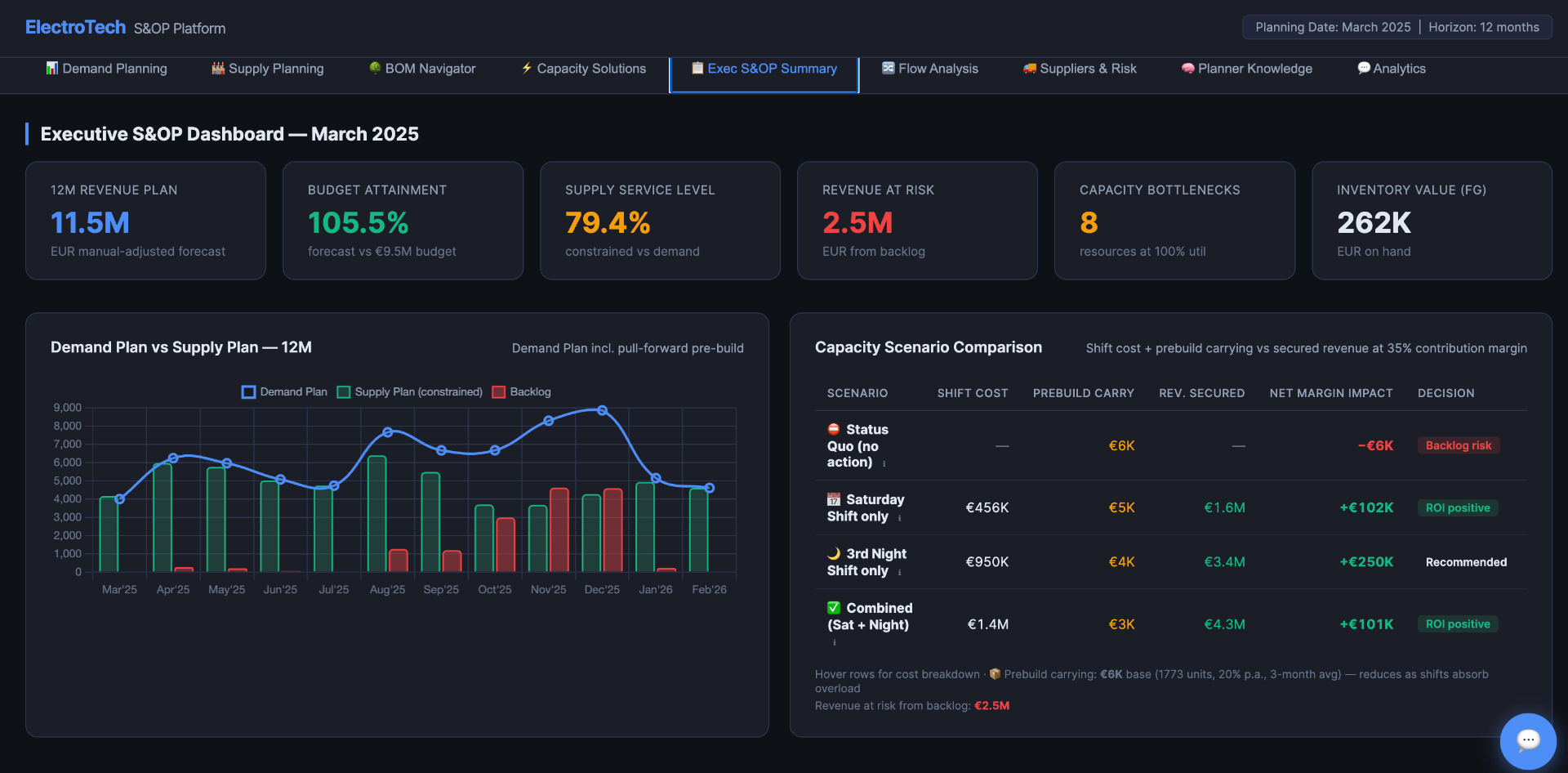
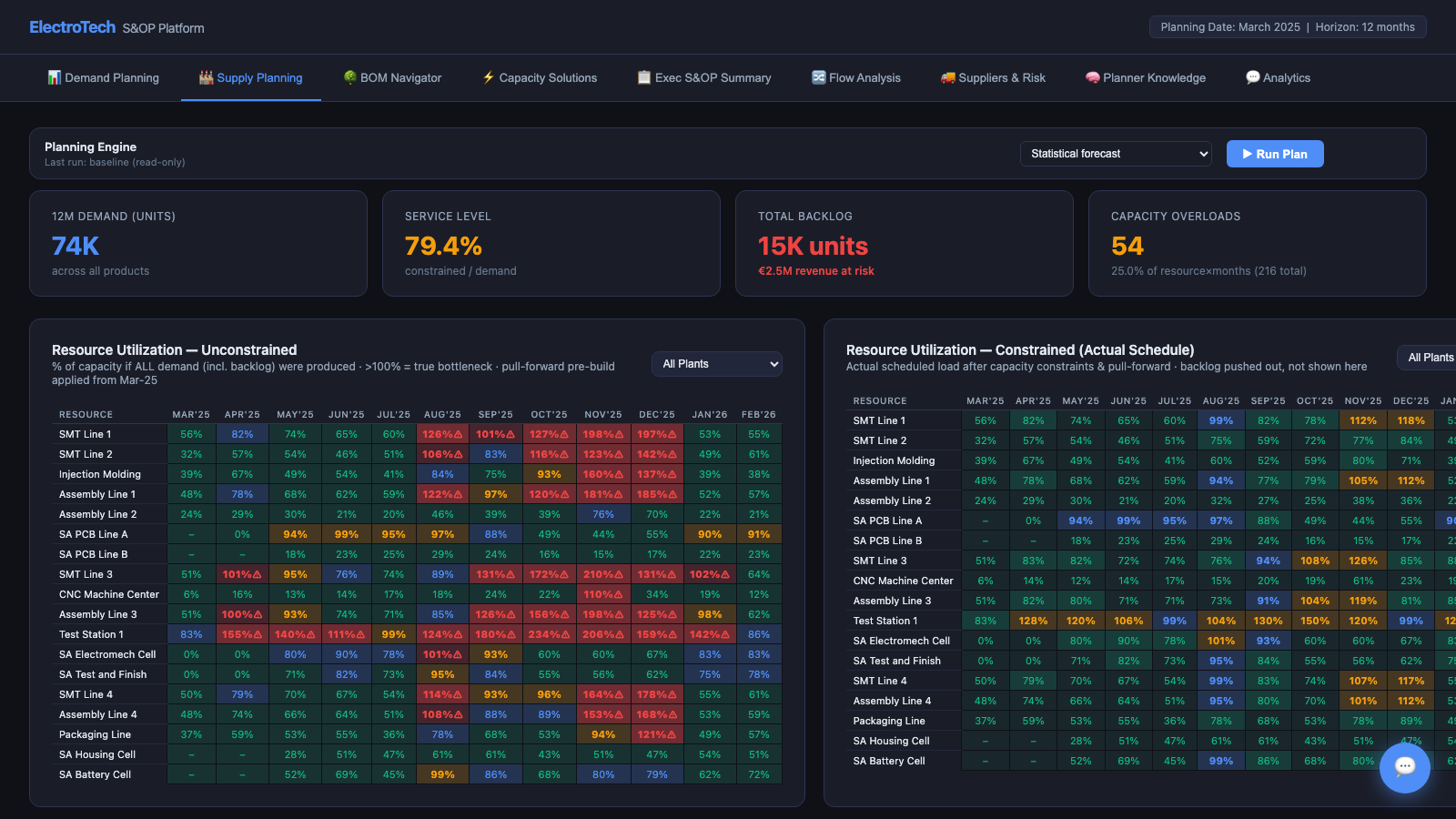
Built by Knut Alicke as a working reference and walked through live at the end of the session. Read the build story ↗
Meet your facilitators
Led by Knut Alicke & Andrei Palamariu.
Two operators who have run this method with global supply chain teams, MBA cohorts, and inside McKinsey. They run every workshop personally.

Knut Alicke
Senior Advisor & Partner Emeritus, McKinsey & Company · Professor · Co-author, From Source to Sold.
Knut led McKinsey's European Supply Chain Practice and has spent 20+ years advising global operations leaders on transformation, analytics, and now agentic AI.
- 20+ years at McKinsey & Company
- Former leader, European Supply Chain Practice
- Co-author, From Source to Sold
- Professor and executive educator
- Advisor to global C-suite and supply chain startups
- Ranked among the world's top supply chain influencers

Andrei Palamariu
Founder, Supplify · Supply chain network-builder · Host, Leaders in Tech and Ecommerce Podcast.
Andrei creates and nurtures a global network of solution providers and value chain executives. At Supplify, he built a platform that connects leading tech providers with key supply chain executives — bridging advanced technology and the evolving needs of the industry across Europe, North America, and APAC.
His favorite conversations sit at the intersection of digital transformation, growth, turnarounds, and product — the same conversations this workshop turns into working tools.
- Identify REMARKABLE players in the supply chain ecosystem
- Build long-term PARTNERSHIPS with operators and founders
- Cultivate TRUST in everything Supplify ships
Why this is credible
Proof we can stand behind.
- Built specifically for supply-chain and operations teams
- Realistic data and operational workflows
- Practitioners and leaders work together
- Every use case ends with a decision
- Designed to connect experimentation with governance and IT
Formats & pricing
Start with one workflow. Expand only when the evidence supports it.
All on-site. Standard delivery capped at 15 participants. All built around the same hands-on core.
Ignition
A sharp, high-impact first taste for one team.
- Up to 15 participants, one company
- Executive keynote
- One guided hands-on build
- Workshop materials and dataset library
Immersion
The core programme. Deep enough to ship two real artifacts.
- Up to 15 participants, one company
- Executive keynote
- Two guided builds with live coaching
- Share & pressure-test session
- Prioritised use-case roadmap
Immersion + Programme
For functions ready to convert the workshop into a programme.
- Everything in Immersion
- Follow-up coaching clinics
- Executive sponsor readout
- 90-day roadmap development
- Enablement support for internal champions
Scale
Roll the method out once the evidence supports it.
- Multiple cohorts across functions or regions
- Shared use-case portfolio and governance
- Local facilitation and enablement
- Custom scope and pricing
Open executive cohort
For individuals and smaller teams — cross-company learning with peers.
| Seat | Price | Includes |
|---|---|---|
| Early bird | €950 | Limited seats — book early |
| Standard | €1,250 | Full workshop experience |
| Group pack (3) | €3,300 | €1,100 per seat |
| Premium | €1,750 | Adds follow-up clinic / office hours |
FAQ
Questions sponsors usually ask.
Is this an AI training course?
No. It is a working session. There is no classroom curriculum: teams bring a real operational problem and spend the day building, testing and deciding what should happen next.
What type of workflow should we bring?
One with a named user, a repeatable decision and a real cost when it goes wrong — planning, logistics, procurement, inventory, customer claims, master data or operational reporting all work well.
Do participants need technical skills?
No. Technical skills are not required from every participant. If they can describe the rules of their own process clearly, they can build in this workshop.
What data is required?
Realistic sample data, the documented business rules behind the decision, and an acceptance test for what a good answer looks like. Controlled sample or anonymized data is fine.
How do you protect confidential information?
Data-security and confidentiality arrangements are agreed before delivery. Most clients use anonymized or synthetic extracts, or our supply-chain dataset library, so nothing sensitive leaves their control.
Why is the standard workshop capped at 15 participants?
Standard delivery is capped at 15 to preserve hands-on coaching quality. (This cap is separate from the 15 business cases worked on in the Amsterdam workshop.)
What happens after the workshop?
You prioritize in week 1, review progress at week 4, and advance the strongest cases into a governed pilot, another cohort or another function by month 3.
Can the programme run across multiple functions or regions?
Yes. The Scale format covers multi-region or multi-function rollout with scope and pricing agreed case by case.
Start here
Book a discovery call.
Tell us the one workflow you would test first and the decision it should improve. We come back within two working days with a tailored agenda and the most practical next step.